






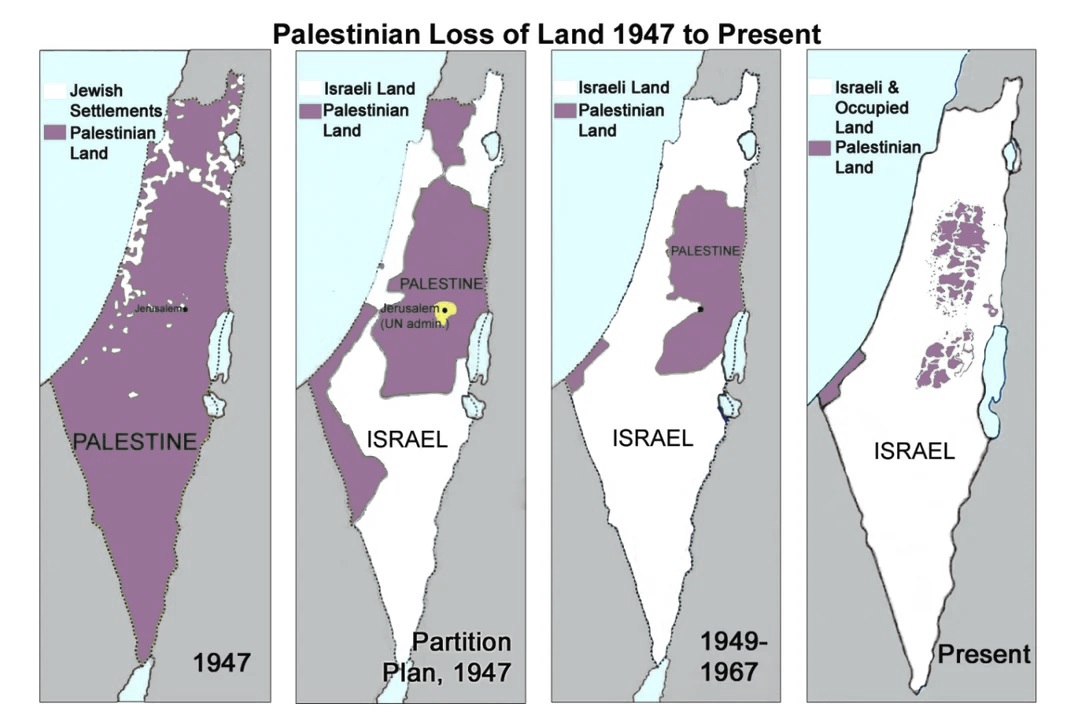
A Century-Long Tug-of-War
In 1850, Palestine was home to approximately 500,000 inhabitants, predominantly Arabs. The population consisted of 400,000 Muslims (80%), 75,000 Christians, and 25,000 Jews, alongside a small Druze community. For centuries, these groups lived in relative harmony. However, the late 19th century brought a significant shift with the emergence of Zionism—a political movement advocating for the establishment of a Jewish state in response to discrimination and violence faced by Jews in Europe. Initially, various territories were considered for this endeavor, but the Zionists ultimately chose Palestine.